The IMPACT Magazine Volume 1
The Luminous Glory of Light
Bob Sandford is the Senior Government Liaison, Global Climate Emergency Response at the United Nations University Institute for Water, Environment & Health. Here, he reflects on a life in the pursuit of truth, conservation and hope for our warming planet.
By Izabela Jaroszynski
Scroll down to read

» The IMPACT Magazine Volume 1 «
The Luminous Glory of Light
Bob Sandford is the Senior Government Liaison, Global Climate Emergency Response at the United Nations University Institute for Water, Environment & Health. Here, he reflects on a life in the pursuit of truth, conservation and hope for our warming planet.
By Izabela Jaroszynski
Scroll down to read

There was a defining moment in Bob Sandford's life when light turned suddenly to darkness. He was twenty years old and working as a summer naturalist with Parks Canada in the Rocky Mountains. It was a job for which he was neither qualified — "I didn't know my mountain goats from my sheep, my wolf from my coyote" — nor wanted — "they said: you were not our first choice."
Yet, the work suited him. He discovered he loved guiding people through the mountains, helping them connect to the landscape through story.
"I'd try to give people new information and open their eyes to what was surrounding them that they may not have seen otherwise, and explain the connections between things," he says. "I'd aim to end up at a reveal. A place of such mind-boggling beauty that it created an epiphany. And I would leave them there to have that epiphany, based on the information I had given. So they would go home absolutely changed because they had constructed that revelation themselves."

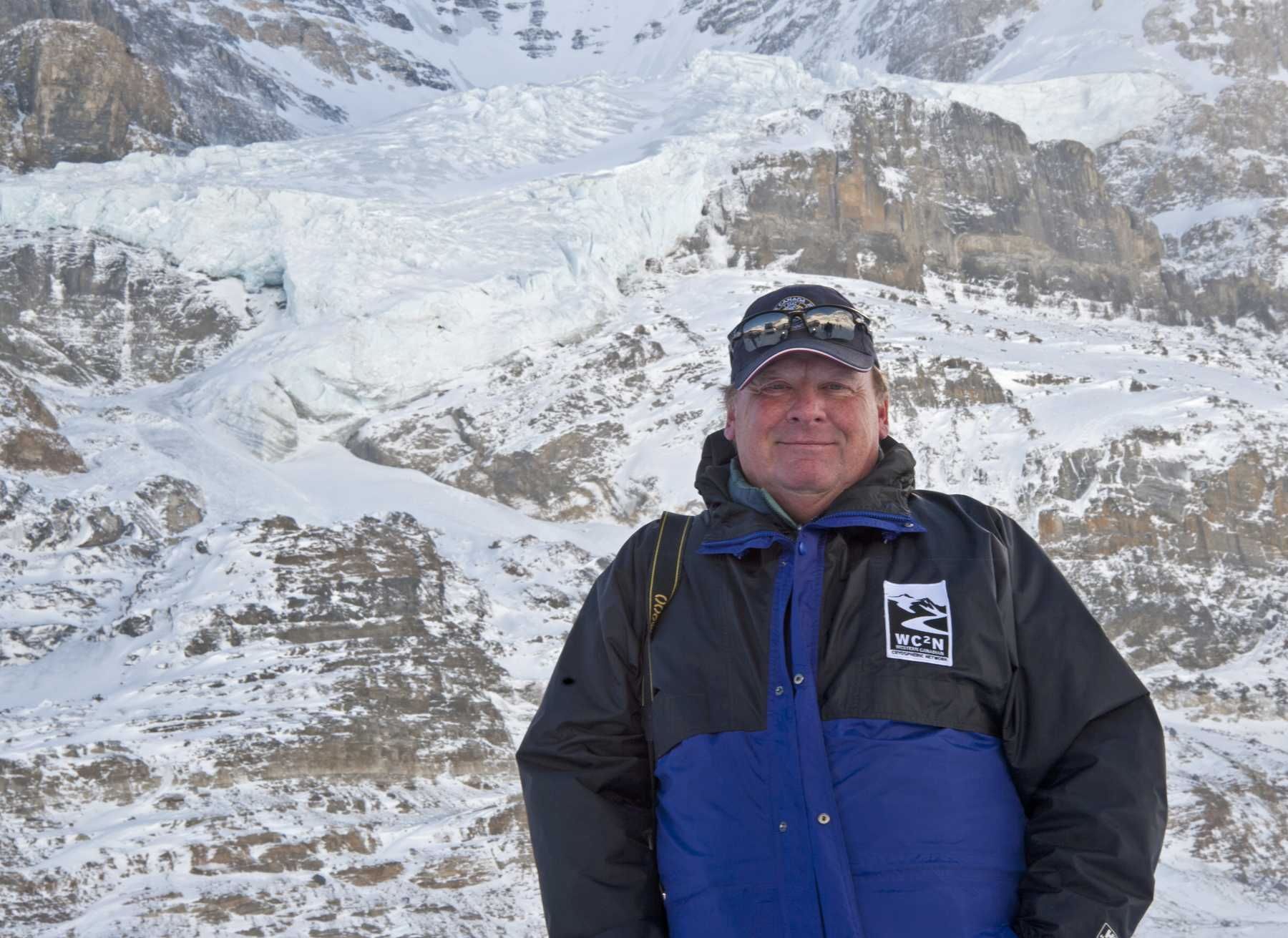
Bob Sandford, photographed here on the Athabasca Glacier.
Bob Sandford, photographed here on the Athabasca Glacier.

On one of his days off, inspired by photos shown to him by a mountaineering friend, Bob set out on what he thought would be a quick two-day hike across the Columbia Icefield.
When you're young, Bob says, you think: how big can an icefield be?
He underestimated the distance and the terrain. On the second day, eager to return to work, Bob took a shortcut across the glacier. The surface streams were running high with meltwater — rivers over ice — and when his footing slipped, the current swept him away.
He was pulled toward a crevasse and down into a millwell, crashing into the walls of ice as he fell.
"I'd gone from the sun sparkle of a beautiful August day and descended into complete night at the bottom of the glacier," he said. "Just when awe was turning to terror, the strangest thing happened. The ceiling on the ice began to glow. At first it was pale green, then it got brighter blue. And then I saw rocks hanging out of the ceiling made entirely of light."
Moments later, Bob was washed out into the full current of the North Saskatchewan River — bruised and shaken but alive, having seen a world few ever get to see.
The experience would become the axis around which his life turned.
"Since then," he says. "I've done my very best to prevent our culture from taking me downstream and away from the luminous glory of that subglacial light."

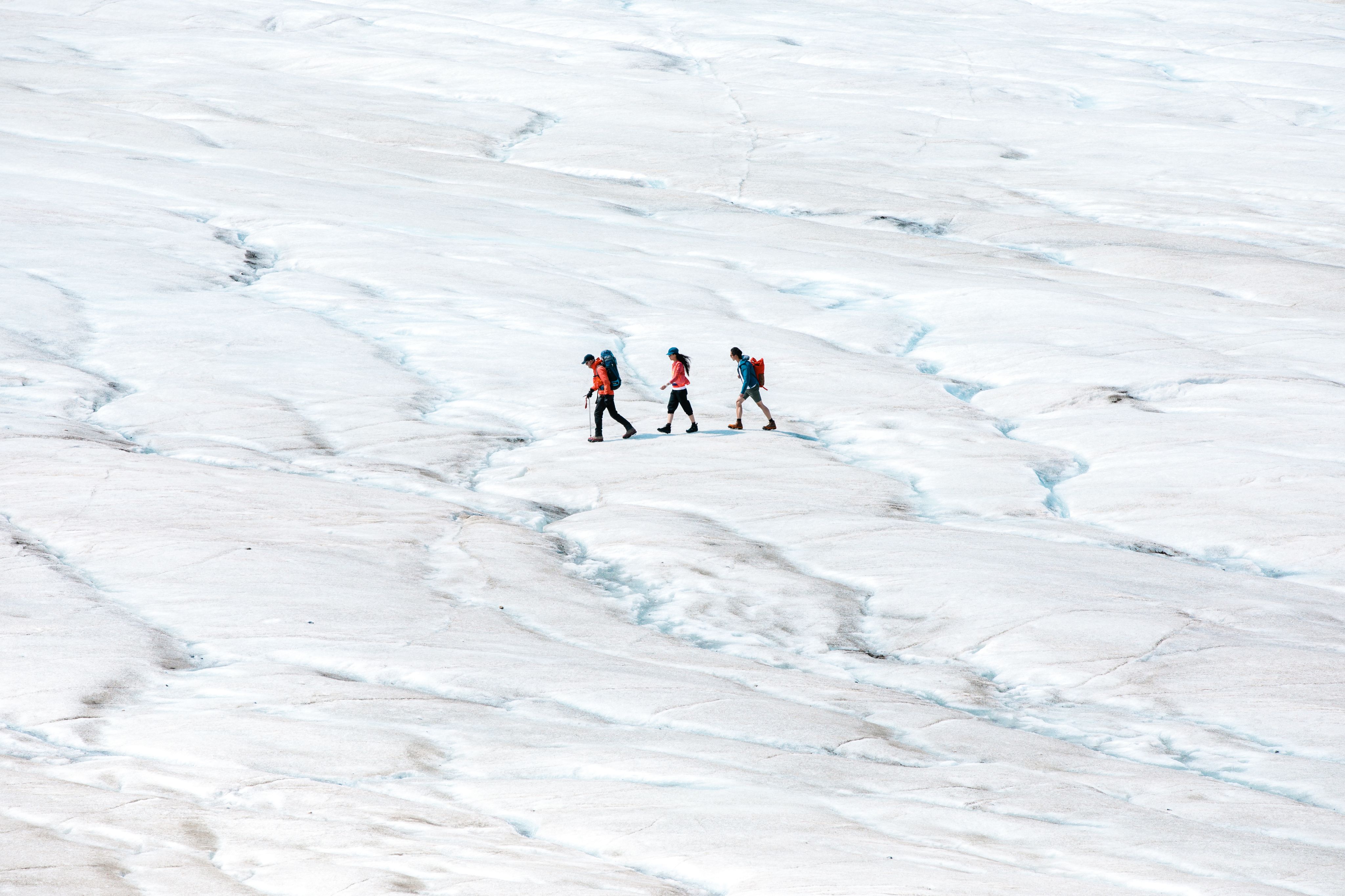

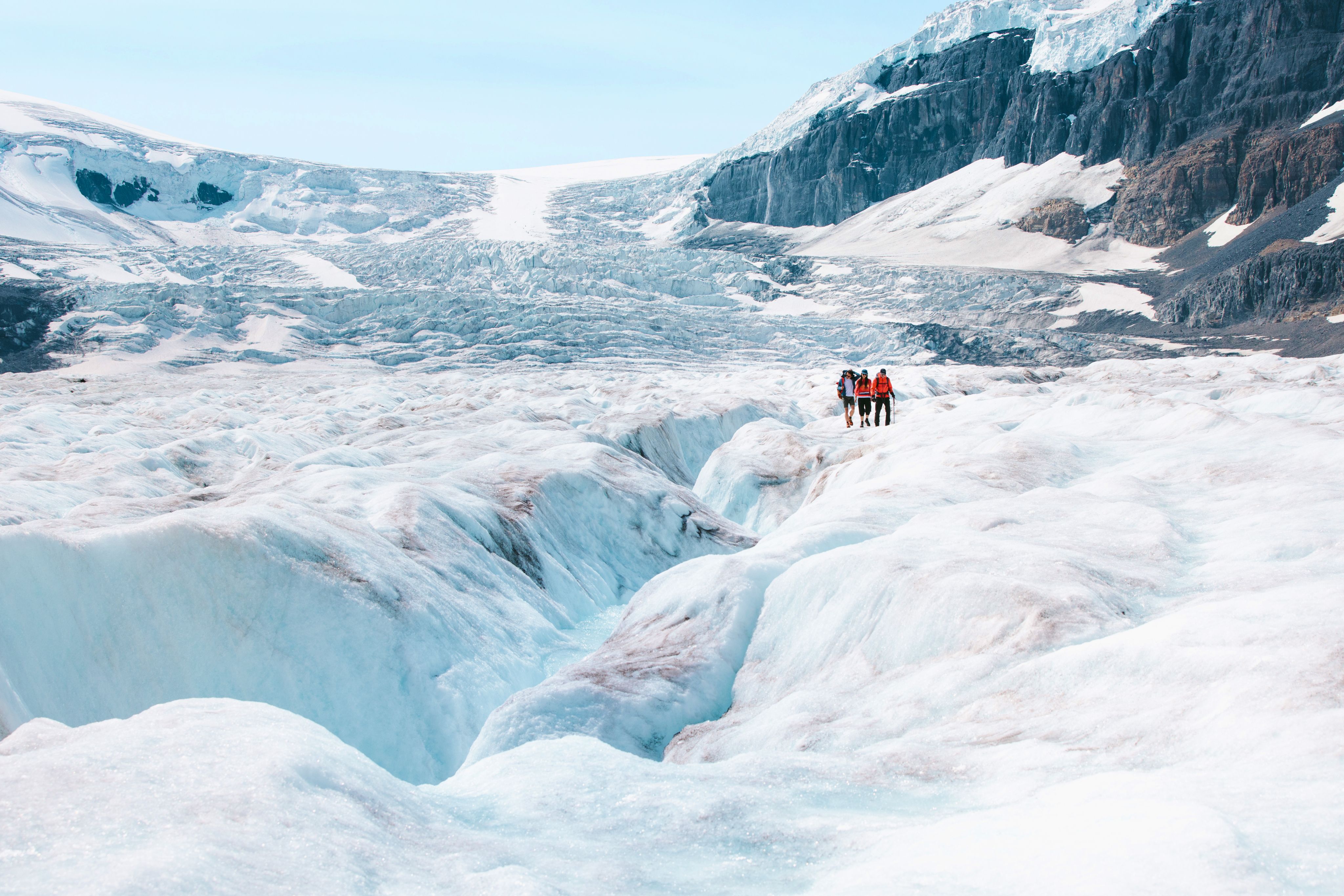
In the decades since that day, Bob has built a life devoted to protecting water and the landscapes that sustain it. A writer, UN water policy expert, and one of Canada's leading climate voices, he has spent his career translating complex science into language governments can use to shape policy — language that people can also understand and act on.
"Unfortunately, the news that I am bringing about the current state of our climate breakdown is getting more and more dire every year," he says.
The Columbia Icefield that nearly took his life has retreated dramatically. Across western Canada, glaciers are melting at twice the rate of just a few years ago.
If no changes are made, he says we are on track to lose 16,000 of the 18,000 glaciers in British Columbia and Alberta by the end of this century.
That loss will reverberate far beyond the mountains.
"Glaciers are the cold fuse that holds our climate system together," Bob explains.
As they disappear, the duration and extent of winter snow cover will shrink, changing the hydrology of the entire west.
Bob is working now at the intersection of fire and ice, because we have entered what scientists are calling the Pyrocene era, a new epoch characterized by the influence of human-caused fire activity on Earth.
Despite the scale of the crisis, Bob resists despair. For him, hope is not a passive state but a discipline.
"If you fall into despair," he says. "You become someone who needs help rather than someone who can provide it. Don't confuse the inability to imagine the future with the impossibility of having one."
That belief grounds everything he does — from policy to poetry to public speaking. It is what draws him each year to the IMPACT Sustainability Travel & Tourism Conference, where he delivers the annual 'Reality Check,' a talk that balances scientific bluntness with moral resolve.
"I come away from the conference feeling refreshed and knowing I'm not alone in this. I think it brings the very best out of people," he says. "I feel the positive intentionality of people who want not just to create a better world, but to bring along with us the best of the world that we have now."
Tourism, Bob says, has a unique ability to tell the story of place — to inspire the same kind of epiphanies he once guided in the mountains. Show people the beauty, give them the context, and they will come to their own conclusions.
"If you fall into despair, you become someone who needs help rather than someone who can provide it."
He believes the Columbia Icefield offers one of the most powerful opportunities to do just that, a chance to help people see not just what is being lost, but what can still be saved.
He encourages guides to help visitors witness and understand a landscape in transformation.
"You can't not see the evidence of change," he says. "And yet many still hesitate to talk about it."
He wants visitors to feel the awe of standing on ancient ice, to understand its fragility but also its power.
That is where tourism can shine, when it slows down long enough to spark understanding, when travellers meet the people who love a place deeply enough to share it.
"There are still people here who do that and can do that because they love it so much," he says. "But we're losing them because of the intensity and density of travel."
Bob's concern for the loss of those voices mirrors his concern for the loss of the planet’s most vital systems. Through his work with the United Nations — first as Canada’s chair for the International Year of Fresh Water, later as part of the Water for Life Decade — Bob has spent years bringing science into conversation with policy.
Yet he argues that science alone cannot save us.
"We need all the other ways of knowing and caring about the world," he says. "Indigenous and local wisdom, and what I call science's older sibling: art. The object is to stimulate the mind but also to open the heart."
For Bob, storytelling — whether through science, art, or experience — is the bridge between awareness and action. He believes we must begin telling different stories: stories of connection rather than division, stories that remind us of our shared responsibility to one another and to the Earth itself.
“One of the most urgent collective actions that we can take is to create new stories about taking care of one another — to create a fresh sort of dream of who we are.”

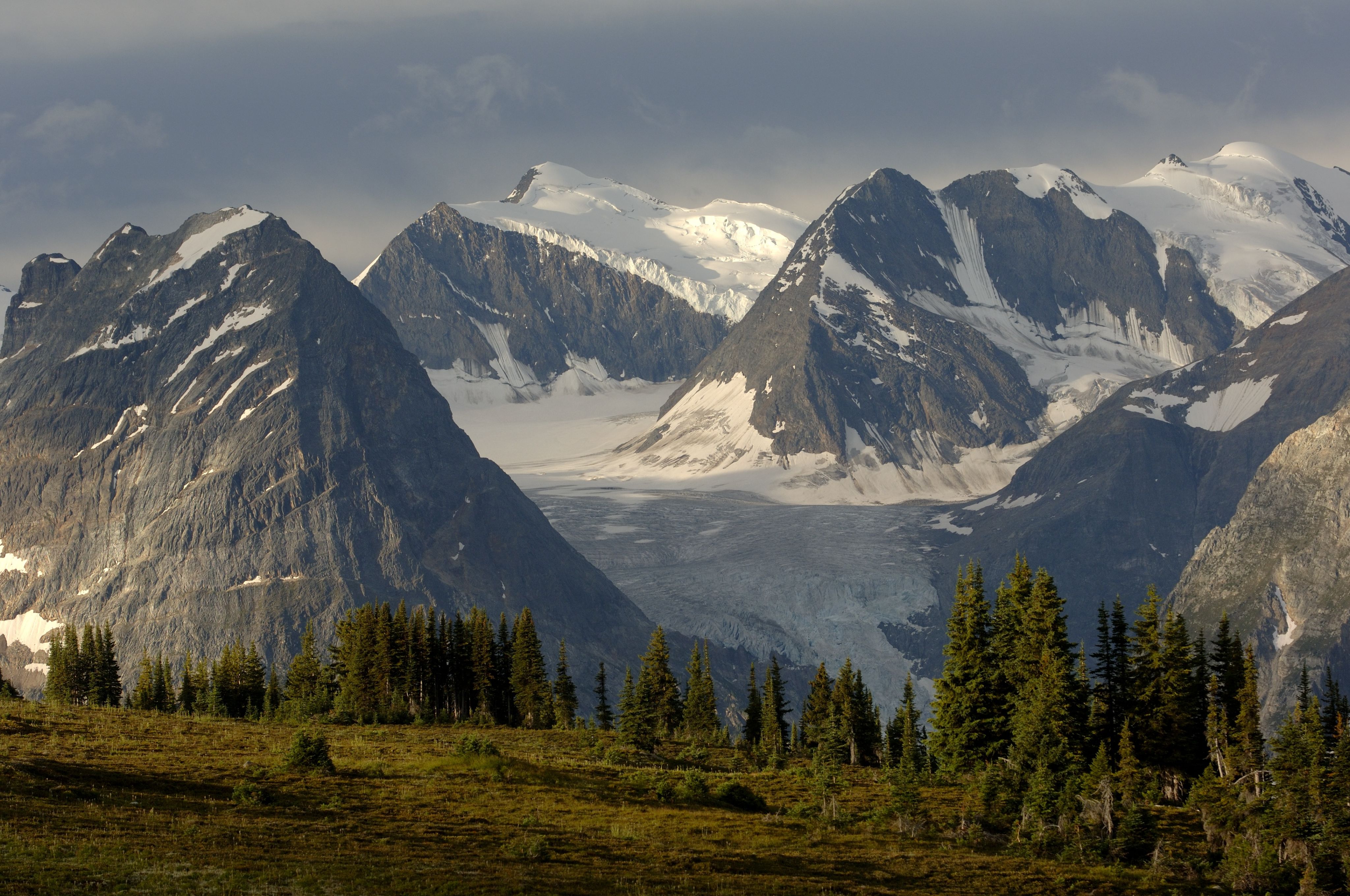
View of glaciers and mountain peaks in Glacier National Park. Photo: Destination BC/David Gluns
View of glaciers and mountain peaks in Glacier National Park. Photo: Destination BC/David Gluns
The young man who once stumbled into darkness has spent his career teaching others how to see the light — the fragile brilliance of a planet still capable of saving itself.
The memory of that subglacial light continues to guide him, a reminder that even in the darkest descent, the world shines back at us.
"I really do think this has to be our finest hour. This is when we do all we can, with what we know, with who we know, with what we’ve got, to make a better world.”